Client: Essex Wildlife Trust
Location: Thameside Nature Park, Stanford-le-Hope
JPB Landscapes were appointed by Essex Wildlife Trust to deliver a new visitor area at Thameside Nature Park, Stanford-le-Hope.
The project focused on creating a welcoming picnic area and a series of ecologically driven gardens, designed to enhance biodiversity while responding sensitively to the site’s history and context.
A key element of the scheme was the use of predominantly recycled and reclaimed materials, including aggregates and timber, many of which were sourced directly from the former landfill site. This approach not only reduced the environmental impact of the works but also ensured the landscape remained rooted in its surroundings.
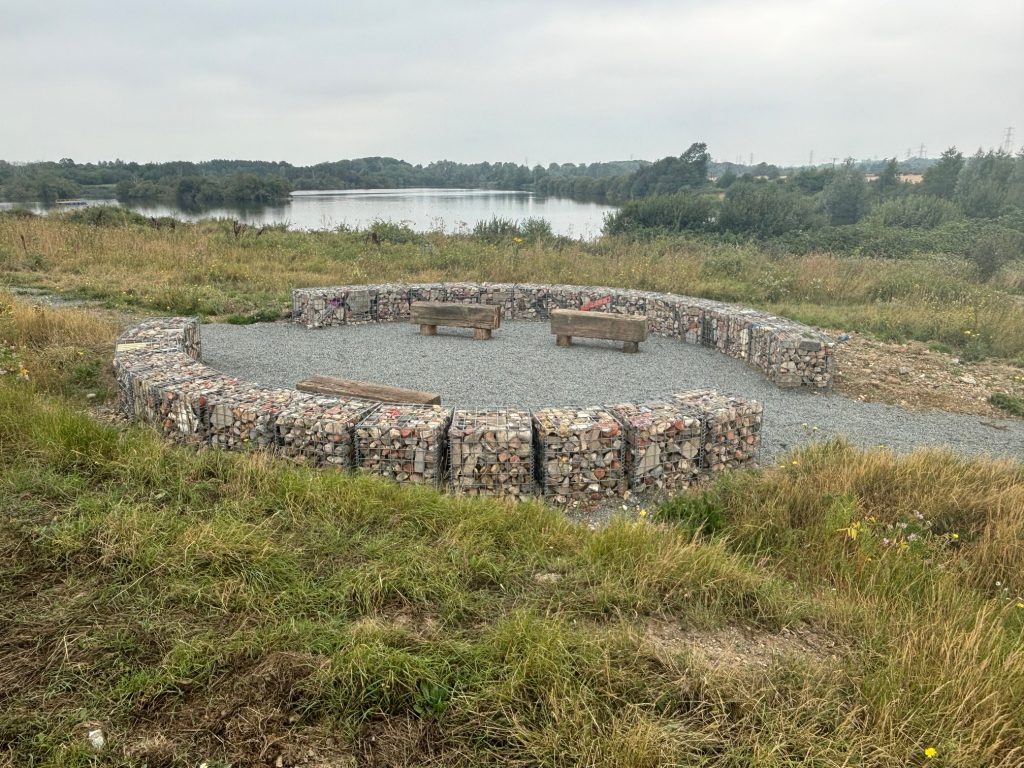
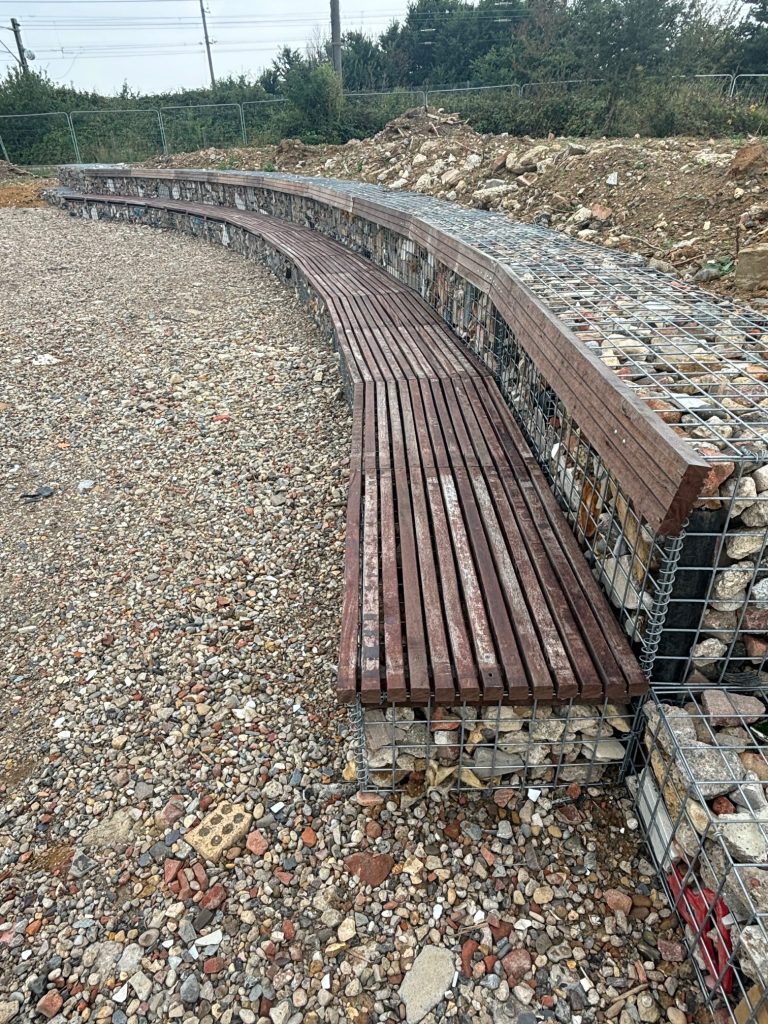
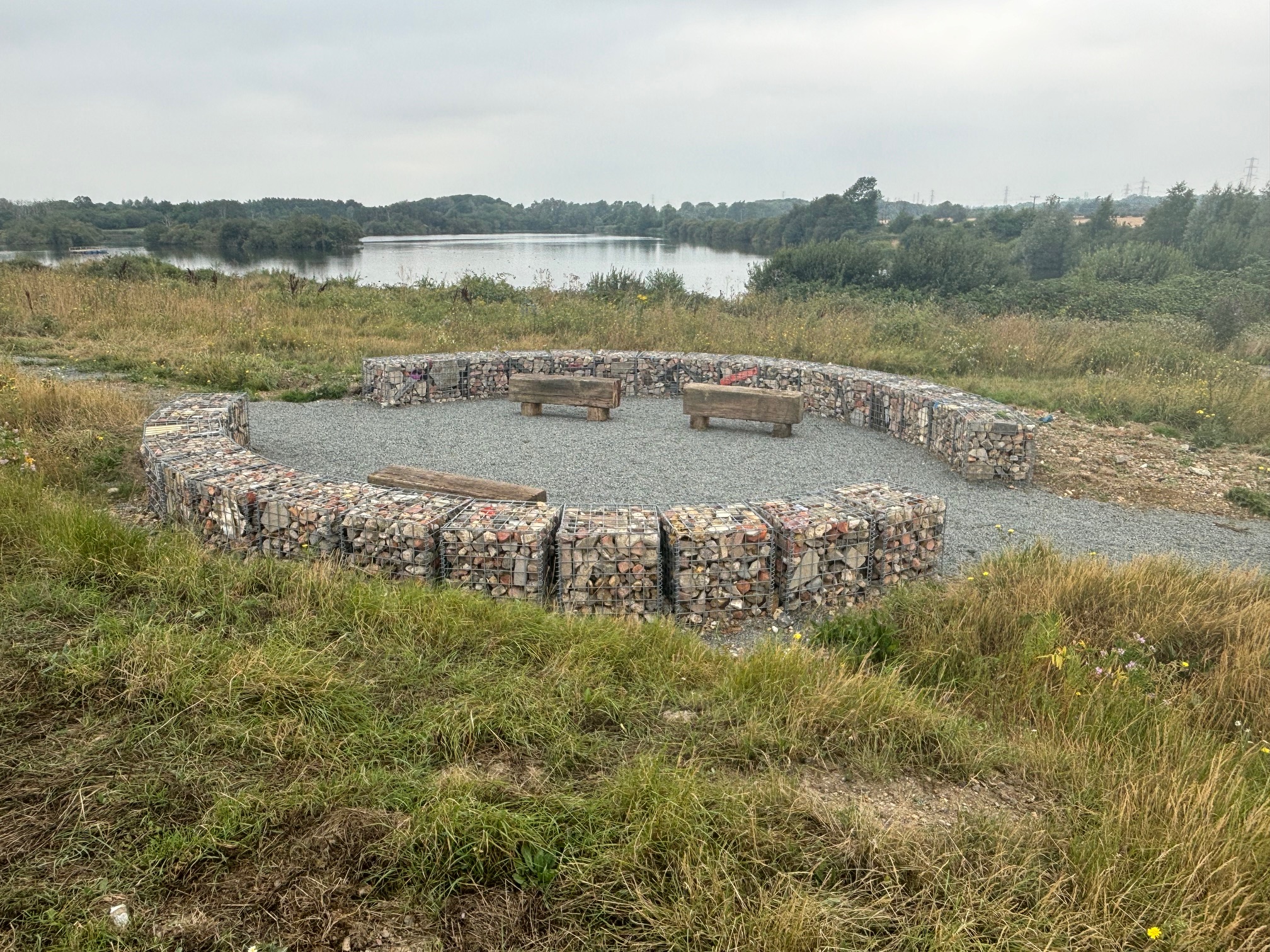
Gabion structures were constructed and filled with crushed concrete and recovered site materials, creating robust landscape features that also function as hibernacula, providing valuable habitats for insects, reptiles, and small mammals.
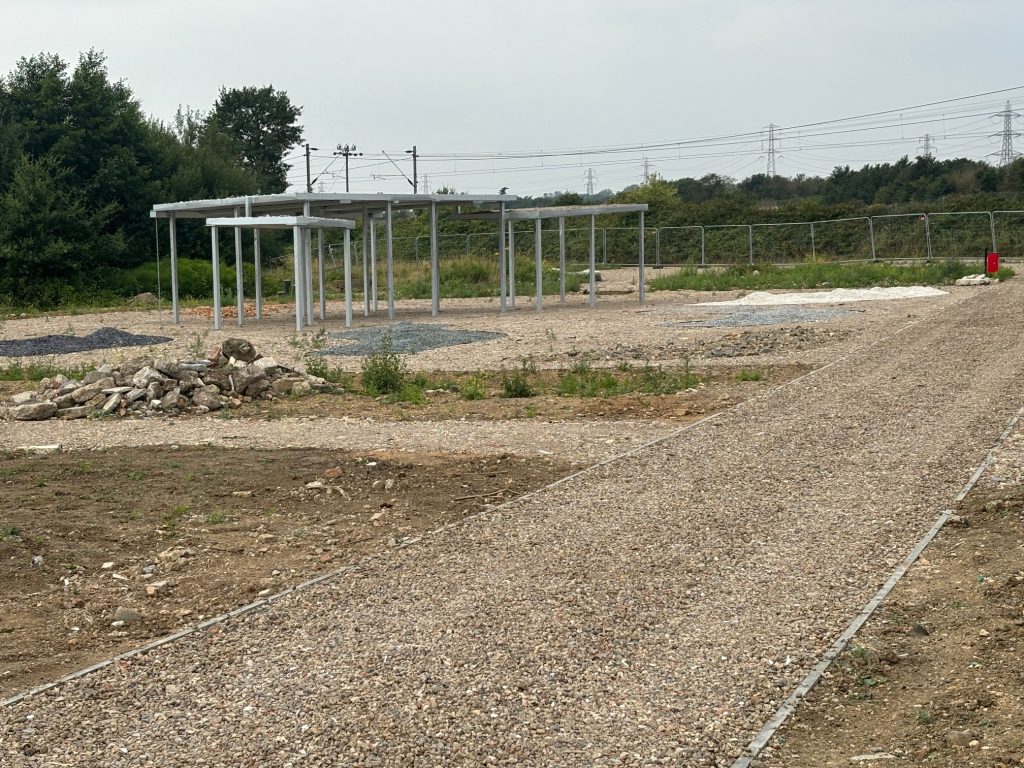
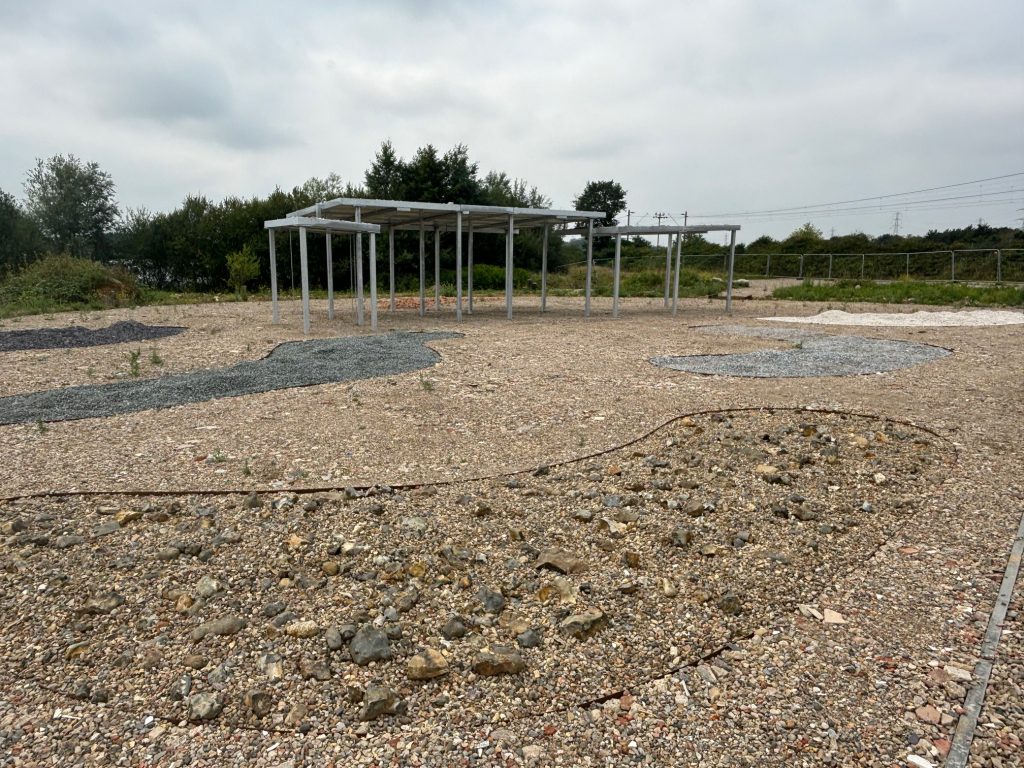
The picnic area incorporated experimental planting beds, designed to explore how wild seed establishes across different recycled substrates. Materials used included reclaimed brick, chalk, slate, sandstone, granite, ceramics, and limestone, each offering varied growing conditions to encourage diverse plant communities.
A pavilion structure was constructed and finished with a green roof. The roof build-up utilised reclaimed ceramics as a growing medium and was seeded with a bespoke wild seed mix. Now approximately 18 months post-completion, the roof is showing strong signs of successful establishment, with wild planting beginning to thrive.
Across the wider site, swales and ponds were formed to manage surface water naturally while creating additional wetland habitats. To maintain accessibility throughout the landscape, footbridges were built using reclaimed and repurposed materials, allowing visitors to explore the site without disrupting sensitive areas.
At first glance, the landscape may appear industrial or unconventional; however, this reflects a deliberate design philosophy. The scheme reconnects the land with its past, using materials that have existed on site for decades, if not centuries, while creating a resilient, wildlife rich environment capable of evolving naturally over time.
This was a fascinating and highly rewarding project for JPB Landscapes. It challenged conventional approaches, deepened our understanding of ecological construction, and is a scheme we are extremely proud to have delivered.